Showing posts with label Governor's Forum. Show all posts

Friday, March 11, 2011

Life is a trip: Following the sheep

The latest issue of Spirituality and Health magazine includes a beautiful article on something called “transhumance,” a term I had never heard despite growing up on a farm and earning a degree in agriculture. It’s apparently “the seasonal movement of livestock from lowlands, where they’re fed in the winter, to high mountain areas, where they graze in the summer.” To get a taste of this tradition, travel writer Judith Fein, accompanied by a small band of curious city dwellers, tags along as Portuguese shepherds finish moving their flocks. Along the way she notices the curving horns, dark faces and other unique characteristics of the individual sheep, the ancient stone road beneath them constructed by “Roman hands” and a fig tree sagging under the weight of ripe fruit too luscious to ignore. Once they arrive in town, musicians are playing their accordions and guitars, the homes are brightly decorated and the locals are offering an array of goods and services. She discovers an elderly basket-weaver, one of the last living practitioners of his craft, who reminisces about the colorful local market he still remembers from his childhood.

She finds the people around her deeply moved by the experience of participating in this ancient pastoral tradition. “The main by-product of transhumance is fresh, natural dairy products from cows, goats and sheep, but equally significant is the nature-based, communal way of life that is now teetering on the edge of extinction,” she writes. She quotes another woman nearby as saying: “I loathe the idea of going back to the modern world, with all the noise, chaos and buzz of electronics.”

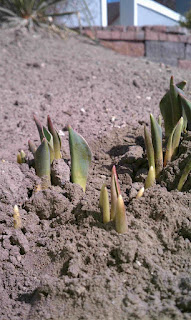
Here and around the world, the agrarian culture is fading away in the name of progress, taking with it a way of life uniquely suited to feeding the human spirit. At the Governor’s Forum on Colorado Agriculture last month, futurist and keynote speaker Lowell Catlett cited fascinating research from the Institute of HeartMath that showed 90 percent of the time when women and horses are around each other, their cardiac rhythms synchronize, evidence of the mysterious depth of the animal-plant-people connection that we are only just beginning to fathom. (Interestingly, heart entrainment only happens 10 percent of the time between horses and men.) Despite a widening disconnect between field and table, this time of year seems to tie everyone inevitably back to a nature-based life, with the early fruit trees blooming, new calves appearing in pastures, the first vegetables sprouting in gardens, the farmers busily preparing to supply another season of abundant summer markets! And it’s not much of a stretch to imagine that we humans have the parasympathetic powers to tap into the vitality of all those flowering bulbs bursting up through the earth or the first sweet blossoms popping out of their buds.
Award winning writer Fein reminds us to open ourselves to the subtle magic surrounding us — whether we are traveling around the globe or just around the corner — and to live with the awareness of a pilgrim seeking to be transformed rather than a tourist looking for momentary amusements. She’s collected her 14 most memorable travel experiences into a book, Life Is a Trip: The Transformative Magic of Travel, assuredly a fascinating and uplifting read, inspiration for the journey.

Friday, March 4, 2011

On farming, healing and quality of life


At the recent Governor's Forum on Colorado Agriculture, keynoter and New Mexico State University agricultural economist Lowell Catlett (shown at right) sought to broaden the definition of agriculture beyond the production of commodities like corn and wheat by pointing to its vast potential contributions to human health and well-being. One of the pioneering programs he mentioned involves putting returning soldiers afflicted with PTSD to work on NMSU's extension research farms. Having a regimented schedule of what his father's generation simply called "chores," plus working around plants and animals, is proving to be one of the most successful treatments available for suffering soldiers, he said.

It reminded me of a recent program I'd heard on American Public Media's The Story, called "Warrior to Farmer." New Mexico native Matthew McCue served in Iraq, but while there he was struck by the important  role of farmers' market in that culture and eventually came to the conclusion that he could do "more good with a shovel" than a gun. He's now engaged in sustainable agriculture. He wants to return to Iraq someday, this time as a farmer rather than a soldier.


And this week's New York Times Wednesday food section chronicles a program in New Jersey that trains people with disabilities for jobs in the hydroponic greenhouse business, supplying stores and restaurants with fresh greens and herbs. The program was inspired by the fact that even someone born with Down syndrome can get blearily bored doing repetitive tasks all day. Through the Arthur & Friends program, which hopes to replicate around the country, trainees nurture life, working with their hands and engaging a wide range of skills, as they go about their day in the midst of a "green oasis."

Not so many generations ago, most kids grew up in a rural setting and many of them had the option of returning home to a family farm or a small town for their livelihood. In the years since, a huge out-migration has occurred, leading to concentrated cities like Denver where long commutes are the norm. Many farm kids who would like to stay and work in agriculture no longer consider it an option if they want to eventually put kids of their own through college or live without the financial cloud of huge operating debts constantly over their heads. Few are willing to live the austere life my own parents did. And as a new generation struggles to get a toehold in today's tough economy, having steady means, savings and assets is becoming more important than ever within families who hope to provide meaningful opportunities for each other.

That said, it seems ironic that we've removed so many people from the farm, only to bring them back again for healing when modern life proves overwhelming and unsatisfying. Or that we wait until someone is suffering from a psychological condition of some kind before giving them the option to experience a way of life that is inherently healthy and rewarding. Our society has been denigrating and devaluing food and fiber production for decades, to where it is hardly viable as a way of life without some additional financial support brought in from an outside funding source.

Catlett believes his generation, the Baby Boomers, will force our world to change. They have the wealth and the numbers to do it. He predicts they will want to return to the old model of being born and dying within the comfort of home (rather than in a hospital.) They will want their pets with them when they go into a care facility, and horses grazing on a green slope outside their window. They will want artisan cheeses and bio-dynamic wines served with their dinner. And as a consequence of these desires, the importance of agriculture will experience a renewal, creating unforeseen opportunities to work in the field. He's considered a "futurist" and that's his vision of where things are headed. He calls it (for lack of a better term) a "plants-animals-and-people thing." They all just seem to go together and form a whole that's more than the sum of their parts. It's old wisdom, of course, being rediscovered in our time.