"What butter and whiskey will not cure, there's no cure for." — Irish proverb


The latest issue of Spirituality and Health magazine includes a beautiful article on something called “transhumance,” a term I had never heard despite growing up on a farm and earning a degree in agriculture. It’s apparently “the seasonal movement of livestock from lowlands, where they’re fed in the winter, to high mountain areas, where they graze in the summer.” To get a taste of this tradition, travel writer Judith Fein, accompanied by a small band of curious city dwellers, tags along as Portuguese shepherds finish moving their flocks. Along the way she notices the curving horns, dark faces and other unique characteristics of the individual sheep, the ancient stone road beneath them constructed by “Roman hands” and a fig tree sagging under the weight of ripe fruit too luscious to ignore. Once they arrive in town, musicians are playing their accordions and guitars, the homes are brightly decorated and the locals are offering an array of goods and services. She discovers an elderly basket-weaver, one of the last living practitioners of his craft, who reminisces about the colorful local market he still remembers from his childhood.
She finds the people around her deeply moved by the experience of participating in this ancient pastoral tradition. “The main by-product of transhumance is fresh, natural dairy products from cows, goats and sheep, but equally significant is the nature-based, communal way of life that is now teetering on the edge of extinction,” she writes. She quotes another woman nearby as saying: “I loathe the idea of going back to the modern world, with all the noise, chaos and buzz of electronics.”

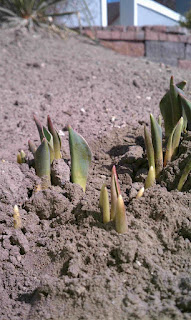
Here and around the world, the agrarian culture is fading away in the name of progress, taking with it a way of life uniquely suited to feeding the human spirit. At the Governor’s Forum on Colorado Agriculture last month, futurist and keynote speaker Lowell Catlett cited fascinating research from the Institute of HeartMath that showed 90 percent of the time when women and horses are around each other, their cardiac rhythms synchronize, evidence of the mysterious depth of the animal-plant-people connection that we are only just beginning to fathom. (Interestingly, heart entrainment only happens 10 percent of the time between horses and men.) Despite a widening disconnect between field and table, this time of year seems to tie everyone inevitably back to a nature-based life, with the early fruit trees blooming, new calves appearing in pastures, the first vegetables sprouting in gardens, the farmers busily preparing to supply another season of abundant summer markets! And it’s not much of a stretch to imagine that we humans have the parasympathetic powers to tap into the vitality of all those flowering bulbs bursting up through the earth or the first sweet blossoms popping out of their buds.

Award winning writer Fein reminds us to open ourselves to the subtle magic surrounding us — whether we are traveling around the globe or just around the corner — and to live with the awareness of a pilgrim seeking to be transformed rather than a tourist looking for momentary amusements. She’s collected her 14 most memorable travel experiences into a book, Life Is a Trip: The Transformative Magic of Travel, assuredly a fascinating and uplifting read, inspiration for the journey.

It reminded me of a recent program I'd heard on American Public Media's The Story, called "Warrior to Farmer." New Mexico native Matthew McCue served in Iraq, but while there he was struck by the important role of farmers' market in that culture and eventually came to the conclusion that he could do "more good with a shovel" than a gun. He's now engaged in sustainable agriculture. He wants to return to Iraq someday, this time as a farmer rather than a soldier.
In the increasingly popular food nonfiction genre, William Alexander offers up compulsively readable stories. Never preachy, he poses as an unassuming middle class East Coast professional whose wit and self-deprecating humor, curiosity and willingness to learn lead him into intricate adventures growing his own apples and tomatoes, and making his own peasant bread in his home kitchen.
In his latest, 52 Loaves: One Man’s Relentless Pursuit of Truth, Meaning, and a Perfect Crust, he chronicles his education as he makes one loaf a week for a year in hopes of achieving bread perfection. Along the way, he dispenses crumbs of fascinating cultural and scientific trivia. For example, the reader learns early on that Sunni militants in Baghdad drove the Shiites out of targeted neighborhoods by killing the bakers: “To shut down a well-known bakery in a neighborhood, that means you paralyze life there,” one man explained. After months of research and experimentation, Alexander ends up in an ancient French monastery, rigging a sourdough variation that will fit into the regimented schedule of monks who still pray seven times a day, as they have since the 600s. In the pages between, he consults experts like Peter Reinhart and a grain scientist at Bay States Milling for bread-making insight, and goes through the laborious process of raising, threshing and stone-grinding his own wheat.
His first book, The $64 Tomato — subtitled “How one man nearly lost his sanity, spent a fortune, and endured an existential crisis in the quest for the perfect garden” — takes its title from an accounting toward the end of the summer in which he attempts to put a dollar figure to each of his beautiful ripe late summer Brandywine tomatoes. As he meticulously adds them all up, the figures startle him. He easily computes the privilege of growing each palm-sized gem at $64.
“Food is cheap,” Alexander writes, as he muses on his self-imposed accounting exercise. “I actually grew a fair amount of food; it just wasn't worth much. For example, my local green market is selling a ten-pound bag of white potatoes for $1.50 - just 15¢ a pound. A person could probably eat well from that buck-fifty bag for several days. (For this exercise I valued my Yukon Gold and fingerling potatoes at $1.50 per pound.) Every time I'm done picking sugar snap peas or rise from my stoop, aching, from picking green beans, I marvel that I can buy this stuff in the green market for a dollar a pound. How can anyone possibly grow green beans for a dollar a pound? I can't even pick them for a dollar a pound, it takes so long. It's a miracle that any farmer stays in business, but God bless them.”
His good-humored calculations raise a serious point, of course, one which confronts agriculturalists everyday: the difference between what it costs to grow food compared to how it’s priced at the store, in many cases far below a realistic cost for the vagaries of production. For a home gardener (in this case, one who plans to keep his day job at the nearby research institute) it isn’t an issue, but just the number alone exposes a startling gap that is not easily or often explained well, even while we note the obvious: rural towns in decline and family farm business structures that have been forced to change, in some cases, dramatically, to achieve the scale and efficiency to survive economically. This is all happening at the same time as an increasing number of shoppers seem to be demanding a more romantic, sensual, traditional style of food production.
Alexander seems to have inadvertently put his finger on a modern dilemma (Yes, you can have a lovingly raised, lavishly indulged tomato, but it will cost you $64 a pop.) By documenting his own experiences, he reveals the timeless — and time-consuming — nature of the arts of food and agriculture, which are impossible to mass produce without compromising something. Read him to understand why even relatively pricey food is often still a bargain, and find yourself smiling (or chuckling) as you do.

One of the surprises in the aftermath of a lawsuit alleging that Taco Bell has been using a meat filling made with only 35 percent beef and advertising it as “ground beef” to customers was how many out in the cyber universe heralded the news, saying the less beef in the beef the better. (By definition, ground beef must contain 70 percent ground-up lean to still be considered beef.) When and why did natural nutrient-dense beef take on such a tarnished reputation? What makes consumers think, even for a minute, that soy-based products and other fillers and binding agents are more natural and healthy for the body than actual meat?
While conventional wisdom continues to demonize the saturated fat in animal products and insinuate meat as a morally dubious choice, a few courageous souls have been willing to question that rhetoric. Robert Adkins and Sally Fallin come to mind. More recently, science writer Gary Taubes spent five years researching and writing Good Calories, Bad Calories before coming to the conclusion that climbing rates of obesity and Type 2 diabetes is caused by the “quality and quantity of carbohydrates” in American diets AND the skyrocketing intake of sugar and high fructose corn syrup, which wreaks havoc on insulin, metabolism and fat deposition, thereby changing the whole ecology of the human body. Those are the two biggest changes that have occurred during the last half-century while the obesity epidemic was taking off. He assumes a correlation but also says more studies are needed… critical studies that aren’t getting funded, probably because the theories are unpopular with the powerful processed food industry.
Taubes is scheduled to appear Wednesday evening at the Tattered Cover Bookstore in Denver on Colfax to sign and talk about his latest book, Why We Get Fat: And What To Do About It. He describes it as a shorter, less science dense instruction manual that builds on the research laid out in his previous book. In my opinion, Good Calories, Bad Calories is totally absorbing, a refreshing contrast to all the glib over-simplistic diet advice that’s out there. For one thing, he disputes the calories-in, calories-out theory that insists if we just ate less and worked out harder and more often we could keep our weight down. Instead of resorting to starvation and wearing out our joints, he argues we need to look more critically at WHAT we eat. Reducing carbohydrates allows us to increase meat, with its high quality protein and healthy fats, and still enjoy a sensation of satiation. Yes, meat tends to be more expensive, more difficult to prepare and some would argue less addictive, all reasons carbs make up an increasingly higher percentage of our diets.
A journalist, Taubes claims he started his research with no preconceived ideas or agenda, and his conclusions make for extremely important food for thought. His willingness to dig deeper is a reminder to beware the dangers of oversimplification or of looking for a one-size-fits-all magic bullet when it comes to improving our health.