Thursday, April 14, 2011

Sugar: Not so sweet after all


Science writer Gary Taubes is back, this time with a piece about an insidious but plentiful dietary compound that in all likelihood is far more dangerous than fat and red meat: sugar. His recent article in the New York Times Magazine, "Is Sugar Toxic?" combs through the research to find out how much is too much. Americans, by the way, eat a lot.

His digging shows that if sugar is toxic, it is of the "chronic" versus "acute" form, which means that while humans can tolerate high sugar in a meal or two, it might blind them to the impact it has over thousands of meals (which actually transpires over a period of mere months.) His investigation also shows that diabetes and metabolic syndrome are very likely triggered by fat we can't see: fat that accumulates in the liver as it attempts to metabolize large amounts of sweetened food. There's even a potential link to many common cancers: elevated insulin and related hormones (needed to process sugar-laden diets) appear to feed and accelerate tumor growth.

As he has in the past, Taubes mentions the Inuit, who experienced vibrant health and virtually no diabetes or malignant cancers while eating traditional diets, comprised of copious amounts of fatty meat accompanied by virtually no fruits or vegetables. As their diets became more "Westernized," rates of diabetes and cancers shot up.

Perhaps most telling in his article: the researchers who study the connection between cancer and sugars (here we are talking about the added stuff, not what is naturally occurring in fruits and other foods) have tried to eliminate it from their own diets. They admit that to them sugar is "scary."


Taubes has been doing some remarkable research and following it up with bold, provocative writing. He's responsible for the monumental piece "What if It's All Been  a Big Fat Lie?" which was published by the New York Times back in 2002. It reopened the debate over whether meats and meat fats are really the culprits behind modern diseases. His contention: not likely.

Tuesday, April 12, 2011

Home kitchen entrepreneurship

“The City is planning to outlaw chicken slaughtering, which is currently not prohibited. The officials writing this law insist that it is currently prohibited and thus the change is not really a change, but when I ask them to tell me where it says this in the law they give me different answers, and never tell me where it states this… So it will be legal to hatch chicks and harbor chickens, but when they are too old to lay eggs or injured say with a broken beak and they cannot eat, you may not kill them. Neither may you slaughter one to eat it… A two-year old chicken is quite fine to eat and our grandparents looked for dinner in their backyards and this was fine.  At a time when hunger issues and food shortage issues are discussed everywhere, we will be required to waste this valuable food resource, usually organically grown. In this way Denver is different from the Soviet Union, where my wife (who grew up there) said no one would think of restricting the rights of the people to produce their own meat from a chicken.” 

— James Bertini, founder of Denver Urban Homesteading

Since they founded Denver Urban Homesteading over a year ago, Jim and Irina Bertini have been fighting the good food fight, which includes their initiative to "free the chickens" in the Denver metro so interested town folk can go back to raising (and slaughtering) their own poultry. They are not alone in their ongoing frustrations with food rules, going so far as to compare the quasi-political patchwork of often petty, ever-changing and unworkable food regulation on the federal, state and sometimes local levels to a food police state. Virtually all of the small farmers and food artisans I know list the daunting labyrinth of food regs as one of their biggest hurdles, though they mostly talk quietly about it among themselves.

Now a fascinating new opposition movement is going public in a big way. Rural communities in New England that have been cultivating local food economies in order to revitalize are pushing "food sovereignty" initiatives. They want federal and state food inspectors and onerous regulations out of their hair. As blogger Kimberly Hartke writes, it's necessary to clear the way for more "home kitchen entrepreneurship."


(For more, read the Sustainable Cities Collective article which begins:

"The town of Sedgwick, Maine, population 1,012 (according to the 2000 census), has become the first town in the United States to pass a Food Sovereignty ordinance.  In doing so, the town declared their right to produce and sell local foods of their choosing, without the oversight of State or federal regulation.  

What does this mean?  In the debate over raw milk, for example, the law opens the gate for consumer and producer to enter a purchasing agreement without interference from state or federal health regulators."

Or Bloomberg Business Week, which summarizes:

"Two small towns have passed ordinances that would make small-scale farmers exempt from state and federal regulations if they sell foods they process directly to consumers.")

It's clear that these communities — which are betting their futures on a revival of local food — want to simplify food business certification and oversight. It's already highly debatable whether it should be illegal for someone to make a coffee cake in their home kitchen and sell it at a community farmers market just down the block. How can we have "cottage producers" or "cottage businesses" without the cottage (by prohibiting its use and insisting instead on something called a commercial kitchen... now doesn't that sound appetizing?)

I recognize the value of professionalism, of elevating a talent to a commercial offering. But I also recognize there will always be risks associated with living and eating and that disease-causing organisms are a naturally occurring part of the environment. The question: are food safety rules realistic, decipherable and flexible enough or are they actually a trade barrier, making it difficult for small local food producers to compete even with imported items that travel halfway around the world from under-developed countries?

Should it put our mind at ease that big food manufacturing plants are occasionally inspected, along with the copious shipments of imported food and food ingredients? Or that these companies have complicated HACCP plans written by high-priced consultants and lawyers and overseen by bureaucrats? The regulations ought to be plain enough to both food producers and consumers that high priced middle men aren't required to spend hours interpreting, and then re-interpreting, them.

On that note, don't forget that tax filing deadline day is fast approaching.


Saturday, March 26, 2011

Small: the next big thing

A life lived with artful intention becomes a work of art. Honoring the creative impulse, however odd or unusual it might seem — and perhaps especially when it seems odd or unusual — often leads to the accidental masterpiece.

So concludes the pre-imminent art writer of our time, Michael Kimmelman, who explores this idea in a thoughtful collection of essays on contemporary, timeless and even eccentric amateur artists. (Among other things, he profiles a dentist and self-made curator who amassed a collection of 75,000 lightbulbs, turning his basement into what he billed the Museum of Incandescent Lighting. As a consequence of obsessively narrowing the lens, even this seemingly mundane object — man-made lighting — becomes a canvas for surprising revelations about human history, discovery, evolution, beauty, mastery and wonder: the curiosities of life.)

Journalist Kimmelman (a sensitive observer who is not to be confused with a mere critic) recently produced another one of his small masterpieces for the New York Times Magazine, this time on the Swiss architect Peter Zumthor. The article reveals the character of one marginally famous man working in a creative field, what he stood for, and, by standing true, what his art conveys. Here’s a description of the hauntingly simple chapel-built-for-one pictured above right:

“(Zumthor’s Bruder Klaus chapel, in western Germany) rises from a modest ridge above the farming village of Wachendorf. In winter, a few deer gambol through crunching snow from the surrounding forest, sniff then retreat. The uphill trek from the nearest road, across an empty field, acts like a natural decompression chamber before the first glimpse of the building: an abrupt concrete block with an odd triangular door on one end.

Inside, pitched walls lead to a sort of cave or teepee with a high, teardrop oculus, open to the sky. A handful of people fit comfortably in the space, but ideally it’s made for one or two. Bruder Klaus was a hermit. There are no windows; there is no electricity or running water. Where a central altar might be, there’s a shallow pool of water, formed of rain and snow falling through the oculus. Small bottle-glass portholes add points of light, and undulating walls bear the imprints of 112 spruce trees, chopped down from Zumthor’s clients’ farm, then slowly burned, leaving blackened traces in the thick concrete.

“A small space to be quiet” is how Zumthor described the chapel to me. For the few solitary minutes I spent inside it, it seemed like the most peaceful and secret spot on earth.

The story goes that a family of devout farmers wrote to Zumthor, out of the blue, having hardly a clue of who he was, knowing only that the archbishop in nearby Cologne had hired him to plan a museum, and they asked him to build a field chapel for them — and Zumthor agreed, as long as they could wait a decade. I visited the family at their home. They turned out not to be yokels but prosperous and sophisticated, and they were perfectly aware of who he was. Zumthor, who waived his fee because he found the project intriguing, and who devoted years, as it turned out, to devising the chapel with a construction method that would allow villagers to build it themselves, house-raising-style, now grumbles about how much the chapel ultimately cost him, and how his clients kept trying to cut corners, although he said they ultimately acceded to everything.

Still, the original story has a kernel of truth, because with Zumthor a client is entering, firstly, into a relationship that entails Talmudic discussions and Job-like patience. Ask for an appointment with him, and you may get no response for days or weeks. He employs no publicist, dedicates no aide to media relations. Zumthor has long done what he wants and only what he wants. This has been his virtue and burden, inviting comparison with the late American genius Louis Kahn, another proud perfectionist who built just a few buildings, making the most of a coterie of committed clients to leave behind a handful of masterpieces.”

So many little revelations are packed into this one small slice of story. But most of all, it serves to illuminate the creative impulse that lies at the heart of the artist (dreamer, visionary) versus the mere conveyer of “product.”

In a lengthy, friendly phone conversation with Bob Blair, the chef/owner of Denver’s Fuel CafĂ©, many of the same themes arose: the importance of integrity and authenticity, of honoring quality ingredients (Zumthor, the architect, likes to work with real wood, which he says feels healthier to the body and even has an effect on the skin, but which most architects now consider “too expensive, too complicated and too old-fashioned”) and of deliberately choosing to be small and “off the beaten path” as a way to ultimately make a big impression.

Feel-good marketing aside, there still aren’t a lot of chefs who exhibit Zumthor’s level of missionary zeal. Or Bob Blair’s. As he described to me his quest to track down a non-GMO cooking oil, his level of commitment to sourcing wholesome, sustainably grown products was abundantly clear. It’s exciting to find examples of such artists in our midst: architects who take their cues from nature, history and a sense of place; chefs and farmers who remain first-and-foremost dedicated craftsmen; writers who unearth the complex and subtle truths about what it means to be fully and deeply human. In a time when so much of what surrounds us has been reduced to assembly line commodity, these “accidental masterpieces” stand out, give us pause, light up our imagination.  

Wednesday, March 16, 2011

Get your green on


"What butter and whiskey will not cure, there's no cure for." — Irish proverb

Tender corned beef or a dark rich Guinness beef stew come to mind for St. Patrick's Day. But with a warm, moist breeze blowing and the vernal equinox only days away (that's when the sun crosses the equator and begins concentrating its warmth on the northern hemisphere, marking the official beginning of spring), I can't help thinking about a different kind of green.


Foraging today I discovered some of the first tender spikes of asparagus, to combine with some still-green sage leaves and a saute of red onion, olive oil, a couple of drops of good vinegar, sea salt, ground black pepper and a nice sharp cheddar. How amazingly tender the spears of asparagus as I cut them into pieces!


Another recent pleasure: red swiss chard (U.S. grown although unfortunately not local), chopped and wilted in a saute pan with a similar cast of ingredients except for this time a crumbled blue cheese and fresh chunks of the season's last pomelo grapefruit. Simple pleasures!

If you're looking for more green-is-good ideas, the Wall Street Journal ran a weekend feature paying tribute to the artful possibilities of fresh artichokes (including an appealing roast artichoke, asparagus and potato combination.) Adding to the fun, Food & Wine Magazine devotes an online "page" to multiple recipes for using fresh spring produce, everything from apricots to watercress.

Yes, it's still early. The area gooseberries won't be ripe until July, and they are among the earliest fruits. But the artificial warmth of plastic has helped coax the first baby greens from the ground on area farms, and there will be more, much more, to follow.

Friday, March 11, 2011

Life is a trip: Following the sheep

The latest issue of Spirituality and Health magazine includes a beautiful article on something called “transhumance,” a term I had never heard despite growing up on a farm and earning a degree in agriculture. It’s apparently “the seasonal movement of livestock from lowlands, where they’re fed in the winter, to high mountain areas, where they graze in the summer.” To get a taste of this tradition, travel writer Judith Fein, accompanied by a small band of curious city dwellers, tags along as Portuguese shepherds finish moving their flocks. Along the way she notices the curving horns, dark faces and other unique characteristics of the individual sheep, the ancient stone road beneath them constructed by “Roman hands” and a fig tree sagging under the weight of ripe fruit too luscious to ignore. Once they arrive in town, musicians are playing their accordions and guitars, the homes are brightly decorated and the locals are offering an array of goods and services. She discovers an elderly basket-weaver, one of the last living practitioners of his craft, who reminisces about the colorful local market he still remembers from his childhood.

She finds the people around her deeply moved by the experience of participating in this ancient pastoral tradition. “The main by-product of transhumance is fresh, natural dairy products from cows, goats and sheep, but equally significant is the nature-based, communal way of life that is now teetering on the edge of extinction,” she writes. She quotes another woman nearby as saying: “I loathe the idea of going back to the modern world, with all the noise, chaos and buzz of electronics.”

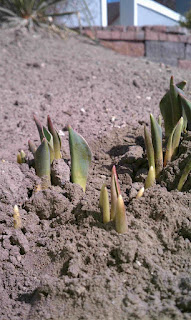
Here and around the world, the agrarian culture is fading away in the name of progress, taking with it a way of life uniquely suited to feeding the human spirit. At the Governor’s Forum on Colorado Agriculture last month, futurist and keynote speaker Lowell Catlett cited fascinating research from the Institute of HeartMath that showed 90 percent of the time when women and horses are around each other, their cardiac rhythms synchronize, evidence of the mysterious depth of the animal-plant-people connection that we are only just beginning to fathom. (Interestingly, heart entrainment only happens 10 percent of the time between horses and men.) Despite a widening disconnect between field and table, this time of year seems to tie everyone inevitably back to a nature-based life, with the early fruit trees blooming, new calves appearing in pastures, the first vegetables sprouting in gardens, the farmers busily preparing to supply another season of abundant summer markets! And it’s not much of a stretch to imagine that we humans have the parasympathetic powers to tap into the vitality of all those flowering bulbs bursting up through the earth or the first sweet blossoms popping out of their buds.

Award winning writer Fein reminds us to open ourselves to the subtle magic surrounding us — whether we are traveling around the globe or just around the corner — and to live with the awareness of a pilgrim seeking to be transformed rather than a tourist looking for momentary amusements. She’s collected her 14 most memorable travel experiences into a book, Life Is a Trip: The Transformative Magic of Travel, assuredly a fascinating and uplifting read, inspiration for the journey.